

The Spirit’s Future Work
Our Living Hope Beyond Time


“And the Spirit and the Bride say, ‘Come!’ And let the one who hears say, ‘Come!’” (Revelation 22:17, ESV)
From the opening pages of Scripture to our present day, the Holy Spirit has been active — breathing life, empowering believers, and guiding the church. Yet the Spirit’s work does not end with us here and now.
His ministry points forward to the grand climax of history: the return of Christ, the resurrection of the dead, final judgment, and the renewal of all things.
This blog looks ahead to the Spirit’s future work — the sure hope that sustains Christians through trials and prepares us for eternity.
Eschatology (End Times)
Eschatology is the theological study of the “last things”: Christ’s second coming, death, judgment, heaven, hell, the future kingdom, and the new creation.
Some churches emphasize this heavily, and theologians like Jürgen Moltmann have devoted entire careers to researching and publishing on these themes. Today, thousands of social media pages post daily, trying to connect world events to the end times.
End-times preaching gained momentum in the 20th century amid rapid technological advances, pandemics, genocides, and globalization. Nuclear technology—and the Cold War tension between the United States and the Soviet Union—fueled fresh theories. As the year 2000 approached, expectations of Christ’s return spiked.
I remember protests against computers, vaccines, and barcodes. Today, some Christians simply shift the fear to Artificial Intelligence and label it as demonic.
I have no doubt we live in the end times.
Yet Jesus calms us: “And when you hear of wars and tumults, do not be terrified, for these things must first take place, but the end will not be at once” (Luke 21:9, ESV).
Paul also warned: “For people will be lovers of self, lovers of money, proud, arrogant, abusive, disobedient to their parents, ungrateful, unholy…” (2 Timothy 3:2, ESV). We see this daily—chasing likes, craving recognition, personal attacks, rebellion, and a culture of ingratitude.
Do not let your heart faint.
In my childhood, I knew a faithful pastor who lived with the newspaper in hand, connecting each week’s headlines to prophecy. That kind of fixation can become eschatomania (an unhealthy obsession with end-times speculation), while the fearful reaction it provokes is eschatophobia (anxiety that avoids or panics about the end).
The Spirit offers a better way—steady hope, sober watchfulness, and holy living as we await Christ.
“Innumerable are the evils which men involve themselves in, who, being unacquainted with the certainty of a future judgment, live as though there were none.” — John Owen
The Spirit in the Return of Christ and Final Renewal
The Second Coming of Christ (Parousia) is not only a promise of Jesus but also the deep longing of the Spirit. Revelation gives us this beautiful picture: “The Spirit and the Bride say, ‘Come’” (Revelation 22:17, ESV). The Spirit within us cries out for the day when faith becomes sight, when the Bridegroom appears, and when all creation is made new.
The Spirit’s role in Christ’s return is to prepare the church as the Bride — pure, spotless, and ready to meet her Lord. Just as Esther prepared herself for the king, the Spirit prepares believers through sanctification, producing holiness and fruit that reflect the beauty of Christ. Paul described this work when he said Christ is sanctifying the church so that He might present her “without spot or wrinkle… holy and without blemish” (Ephesians 5:27, ESV).
The Spirit also serves as our seal of salvation (Ephesians 1:13–14), guaranteeing that we belong to Christ and will be kept for the day of redemption. He is both the foretaste of glory (Romans 8:23) and the down payment of our inheritance, reminding us that what we experience now is only the beginning of what awaits.
Creation itself joins this longing. Paul wrote: “For the creation waits with eager longing for the revealing of the sons of God… For we know that the whole creation has been groaning together in the pains of childbirth until now” (Romans 8:19, 22, ESV).
The Spirit does not just prepare us; He also intercedes with groanings too deep for words (Romans 8:26), aligning our hope with God’s final renewal.
When Christ returns, the Spirit’s work of renewal will reach its climax. Sin will be eradicated, death destroyed, and God’s dwelling will be with His people forever (Revelation 21:3–4). The Spirit who hovered over the waters at creation (Genesis 1:2) will once again breathe life into the new creation, completing the circle of God’s redemptive story.
“The work of the Holy Spirit is not exhausted in the regeneration of individuals, but extends to the regeneration of the cosmos.” — Abraham Kuyper
Resurrection: The Central Hope of Christianity
Without the resurrection of Jesus Christ, there would be no Christianity. His rising from the dead is not just a miracle among many; it is the cornerstone of our faith and the central hope that sustains believers in every generation.
Paul declared it plainly: “If Christ has not been raised, your faith is futile; you are still in your sins” (1 Corinthians 15:17, ESV). The resurrection is the divine stamp of approval on Jesus’ sacrifice, showing that death and sin were truly defeated.
The ascension confirmed His glorified body in heaven, and Jesus gave us the same promise: “Because I live, you also will live” (John 14:19, ESV).
The earliest disciples lived with an urgent expectation that Jesus would return in their lifetime. They carried out their mission boldly, preaching the gospel, planting churches, and preparing for His imminent return. When Christ did not appear within their expected timeframe, they redirected their focus more strongly toward the message of salvation. This was not a failure but a Spirit-led correction.
Evangelism shifted from “Jesus is coming immediately” to “Jesus has risen, and salvation is available today.”
For us, too, this is the right emphasis. As Christians, our daily calling is not to predict dates or obsess over timelines, but to embrace salvation, live by the Spirit, and bear the fruit that proves we belong to Christ. The resurrection guarantees that our faith is not in vain — we are being prepared for eternal life with Him.
The Spirit plays a vital role here. Paul affirms: “If the Spirit of him who raised Jesus from the dead dwells in you, he who raised Christ Jesus from the dead will also give life to your mortal bodies through his Spirit who dwells in you” (Romans 8:11, ESV). This means our resurrection will not be a mere “spiritual memory” or symbolic survival — it will be bodily, real, and eternal.
To explain this mystery, Paul used the picture of a seed: “What you sow does not come to life unless it dies… What is sown is perishable; what is raised is imperishable” (1 Corinthians 15:36, 42, ESV). Just as a small seed must go into the ground and “die” before it rises into a plant far more glorious, so our earthly bodies will be sown in weakness but raised in glory.
Think of it this way: when you bury a seed, it looks ordinary, even lifeless. But in time, it springs forth with beauty and power you never imagined from its small beginning. In the same way, the Spirit will transform our frail, aging, earthly bodies into glorified, eternal ones.
Theologies may differ — some emphasize a single general resurrection, others outline stages such as the resurrection of the righteous before the millennium and the resurrection of the wicked after — but the truth is not in dispute: we will rise with Him in glory.
This is our living hope: that death does not have the final word, the grave will not keep us, and eternity with Christ is secured.
“For the believer, death is not the end, but the doorway into a new and glorious life in the presence of Christ.” — Billy Graham
Tribulation and Millennium: The Spirit in God’s Timeline
For centuries, Christians have wrestled with how to understand the sequence of events surrounding the end times. Scripture gives us glimpses of the future, but not always the precise order. What we do know is that the Spirit will sustain the church in every season — through trials, through hope, and ultimately through the reign of Christ.
The Tribulation
Jesus Himself spoke of a coming time of great distress: “For then there will be great tribulation, such as has not been from the beginning of the world until now, no, and never will be” (Matthew 24:21, ESV). Believers have long debated whether the church will be raptured (taken up to Christ) before this period, during it, or after it.
Pre-tribulation view: Christ removes His church before the suffering begins.
Mid-tribulation view: The church endures the first half, but is taken before the most severe trials.
Post-tribulation view: Believers remain through the entire tribulation, with the Spirit giving endurance.
Whichever view one holds, the promise is certain: “In the world you will have tribulation. But take heart; I have overcome the world” (John 16:33, ESV).
The Spirit is the Comforter who sustains us with courage, hope, and perseverance when trials intensify.
The Millennium
After tribulation comes the question of the millennium — the thousand-year reign described in Revelation 20:1–6. Christians interpret this passage in different ways:
Premillennialism: Christ will return before the thousand years, and then He will reign with His saints on earth during that time.
Postmillennialism: The gospel will transform the world, leading into a golden age of a thousand years, after which Christ will return.
Amillennialism: The thousand years in Revelation is symbolic of Christ’s present reign from heaven, and His return will bring the new heavens and the new earth.
Each view reflects an attempt to understand John’s vision, and faithful Christians have held each perspective across history.
The Spirit’s Steady Work
While timelines are debated, one truth is unshakable: the Spirit will not abandon the church. Whether believers face persecution, endure tribulation, or rejoice in the reign of Christ, the Spirit will preserve their faith, and eternal life if elected for salvation.
He equips the church to endure suffering (Romans 5:3–5), strengthens believers to remain faithful even unto death (Revelation 2:10), and empowers them to live with hope.
When Christ reigns, whether symbolically or literally, the Spirit ensures His people share in His victory.
Judgment Day: The Spirit and Final Justice
Many churches avoid preaching on judgment, yet Scripture is clear: there will be a day when Christ judges all humanity. “For we must all appear before the judgment seat of Christ, so that each one may receive what is due for what he has done in the body, whether good or evil” (2 Corinthians 5:10, ESV).
In recent years, much emphasis has been placed on the idea that “Christianity is not a works-based religion.” While this is true in the sense that salvation is a gift of grace and not earned by deeds (Ephesians 2:8–9), some believers have twisted this truth into a license for arrogance, rudeness, and careless living. The message of forgiveness, instead of humbling hearts, has sometimes emboldened Christians to condemn and insult others—even within the church. If the Lord permits, I hope one day to write on this trend in what I call the “Post-Christian Era,” addressing it theologically, spiritually, and with real-life examples.
Jesus Himself clarified that accountability is part of God’s kingdom: “Therefore the kingdom of heaven may be compared to a king who wished to settle accounts with his servants” (Matthew 18:23, ESV).
Every word, every action, and every hidden thought matters (Matthew 12:36).
In other words, nothing escapes the Lord’s notice. The only way to stand forgiven is through true repentance — not shallow repetition, but a turning away from sin. When we confess and forsake sin, God forgives (1 John 1:9), but to continue in deliberate rebellion is to deny the very grace that saves us.
The judgment day is real and near. If we resist sanctification and fail to live by faith, we risk eternal loss. Scripture describes this final destiny for the unrepentant as “the lake that burns with fire and sulfur” (Revelation 21:8, ESV).
Salvation is indeed the gift of God, but it is His sovereign decision to grant it — never something to take lightly or presume upon.
At the same time, we remember that Christ’s decisive victory over sin, death, and hell was accomplished at Calvary. Through faith, repentance, and forgiveness, His victory becomes ours. “There is therefore now no condemnation for those who are in Christ Jesus” (Romans 8:1, ESV).
His grace secures salvation for all who truly believe. This means we do not need to live in terror of Armageddon or of coming wars — our confidence rests in the One who has already triumphed.
Scripture also distinguishes between the judgments:
For unbelievers: the Great White Throne Judgment (Revelation 20:11–15), where eternal separation from God is pronounced.
For believers: the Judgment Seat of Christ, not for condemnation but for reward and accountability. Jesus even promised His disciples that they would “sit on twelve thrones, judging the twelve tribes of Israel” (Matthew 19:28, ESV).
The Holy Spirit’s role is vital: He convicts us of sin (John 16:8), keeps us watchful, and prepares us to stand with confidence before Christ. He shapes our lives so that judgment day is not a terror, but a day of vindication and joy.
Heaven and Hell: Eternal Realities
If there is eternal life for the righteous, there must also be eternal punishment for the wicked. Jesus Himself spoke plainly: “These will go away into eternal punishment, but the righteous into eternal life” (Matthew 25:46, ESV). Eternity is not an optional theme in Scripture; it is the final reality for every soul.
Heaven
Heaven is the eternal dwelling place of God with His people. John saw a vision of this glorious reality: “Behold, the dwelling place of God is with man. He will dwell with them, and they will be his people, and God himself will be with them as their God. He will wipe away every tear from their eyes, and death shall be no more” (Revelation 21:3–4, ESV).
Heaven is not just an escape from sorrow; it is the fullness of joy, Spirit-filled worship, and life in the presence of Christ. It is where righteousness dwells (2 Peter 3:13), where crowns are laid at His feet (Revelation 4:10), and where love is perfected forever. Every desire of the redeemed heart will be satisfied in God Himself.
Hell
By contrast, hell is eternal separation from God — the dreadful reality of rejecting His gift of salvation. Jesus warned soberly: “Do not fear those who kill the body but cannot kill the soul. Rather fear him who can destroy both soul and body in hell” (Matthew 10:28, ESV).
Hell is described as “outer darkness” (Matthew 8:12), “weeping and gnashing of teeth” (Matthew 13:42), and “the lake that burns with fire and sulfur” (Revelation 21:8).
Hell is not a metaphorical inconvenience; it is the just punishment of sin, the eternal consequence of refusing the mercy of Christ. As heaven is everlasting joy, hell is everlasting loss.
The Spirit’s Guarantee
The Spirit Himself guarantees that heaven is real. Paul calls Him “the guarantee of our inheritance until we acquire possession of it” (Ephesians 1:14, ESV). Every moment of peace, joy, and communion with God we taste now is but a foretaste of eternal fellowship. The Spirit is heaven’s down payment in our hearts.
The Spirit’s Eternal Fellowship with Believers
The Spirit’s ministry is not temporary or limited to this present age. His work of conviction, guidance, and sanctification leads ultimately to unbroken fellowship with God. In the new heavens and the new earth, the Spirit will fill all creation, uniting every believer perfectly with the Father and the Son.
This eternal fellowship means believers will never again fear separation, temptation, or loss. The Spirit who indwells us now will continue to be the breath of life in eternity. Our communion with Him will be perfect, unhindered by sin or weakness.
Heaven will not be static or dull. It will be Spirit-filled life, full of dynamic worship and endless discovery of God’s glory. Paul said: “What no eye has seen, nor ear heard, nor the heart of man imagined, what God has prepared for those who love him” (1 Corinthians 2:9, ESV). In other words, eternity is not monotony; it is an ever-deepening joy in the presence of God.
Think of it as a wedding feast that never ends, a temple where the light never fades, a family reunion where no one departs. The Spirit, who has sealed us now, will be the bond of our everlasting union with Christ.
He is both the promise and the presence of eternal life.
Conclusion
The Spirit’s future work assures us that the story of God is not yet complete. Resurrection awaits, judgment will come, heaven is promised, and hell is real. The Spirit prepares us for these eternal realities, keeping our eyes fixed not only on today but on the glory to come.
As this final blog closes the series, I am reminded that every day is a new opportunity. Three hundred sixty-five days in a year means 365 chances to open Scripture, to pray, and to walk with God. Each morning I rise with gratitude, thanking Him for another day to glorify His name, to share the gospel, and to live in a way that blesses both myself and others.
I do not live in eschatophobia, for I know the Lord gave me the gift of salvation long ago. Without that assurance, I could never have written this pneumatology series on the Holy Spirit. He called me, strengthened me, and carried me through each line.
My prayer is that you too will continue steadfastly on the path of salvation, guided and sustained by the Spirit of God. For the Spirit who began this good work in us will surely bring it to completion at the day of Christ Jesus (Philippians 1:6).
Call to Action
✨ Live today with eternity in mind. Ask the Holy Spirit to shape your daily walk so that when Christ returns, you are found faithful and ready.
One-line tagline: The Spirit points us not just to Christ in the past, but to Christ in the future — our living hope.
Prayer
Holy Spirit, thank you for sealing us for the day of redemption. Prepare our hearts for Christ’s return, strengthen us through trials, and keep our eyes fixed on the eternal hope of resurrection. Help us live with confidence, knowing heaven is our home and Christ is our King. In Jesus’ name, Amen.
A Simple Way to Share Eternal Hope
This blog is part of a growing series on the Holy Spirit that will become a book titled:
“Hearing the Holy Spirit in Everyday Moments.”
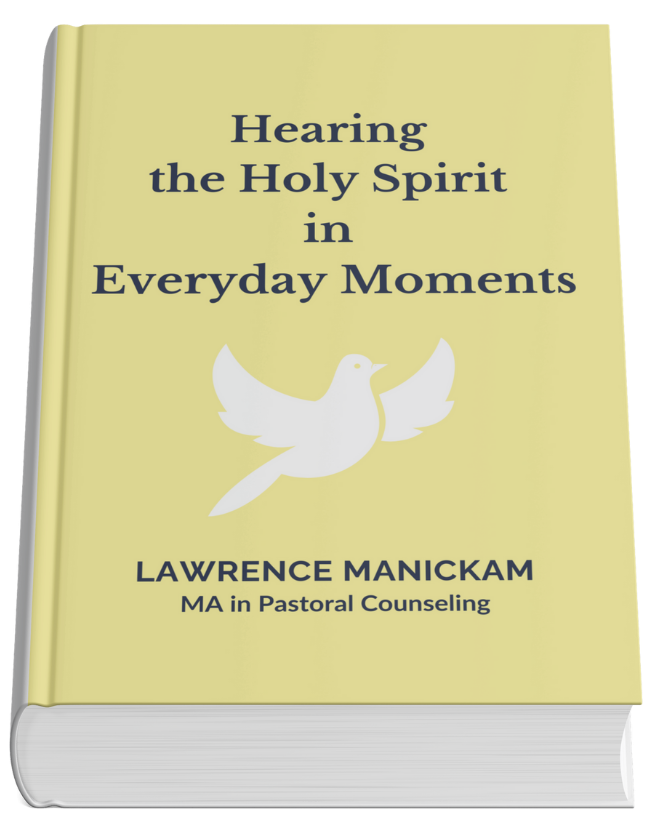
My prayer is to print and distribute this book freely—especially in countries where Christian resources are scarce and where believers long to be reminded of the Spirit’s promise of resurrection, judgment, and eternal life.
Would you consider supporting this vision?
💌 A gift of just $10 covers the printing and mailing of one copy.
If God nudges your heart, I invite you to donate here:
👉 https://www.givesendgo.com/HolySpiritBook
Together, let’s spread the hope of Christ’s return and the Spirit’s eternal work—one book, one believer, one church at a time.
Reference
Graham, B. (1988). The Holy Spirit: Activating God’s power in your life. Thomas Nelson.
Kuyper, A. (1900). The Work of the Holy Spirit (H. De Vries, Trans.). Funk & Wagnalls.
Owen, J. (1674). Pneumatologia. Nathaniel Ponder.
Previous Blogs
Introductory: Farewell Discourse - The Holy Spirit
Blog 1: Holy Spirit in the Old Testament
Blog 2: Holy Spirit in the New Testament
Blog 3: The Personhood of the Holy Spirit
Blog 4: The Spirit Brings New Life
Blog 5: The Spirit in the Church
Blog 6: The Spirit in Prayer and Guidance
Blog 7: The Spirit’s Power for Transformation and Witness
Blog 8: Love: The First Fruit of the Spirit
Blog 9: Joy: The Radiant Fruit of the Spirit
Blog 10: Peace: The Calming Fruit of the Spirit
Blog 11: Patience: The Waiting Fruit of the Spirit
Blog 12: Kindness: The Gentle Fruit of the Spirit
Blog 13: Goodness: The Overflowing Fruit of the Spirit
Blog 14: Faithfulness: The Steadfast Fruit of the Spirit
Blog 15: Gentleness: The Humble Fruit of the Spirit
Blog 16: Self-Control: The Guarded Fruit of the Spirit
Blog 17: Speaking and Serving Gifts
Blog 18: Power and Discernment Gifts
Blog 19: Leadership and Unity in the Spirit
About the author
Lawrence Manickam is a servant of the Lord and founder of Calvary International Mission. He is a Canadian Indian with Mexican permanent residency, living an international life and sharing the love of Christ across cultures. In July 2024, he completed his Master of Arts in Pastoral Counseling at Liberty University, Virginia.
Feel free to contact him if you need biblical counseling, prayer support, or simply a listening ear.
✨ Want more encouraging messages like this? Subscribe to his Substack to receive future posts straight to your inbox.