



Johnson Oatman Jr., an American Methodist pastor and hymnwriter from New Jersey, wrote the hymn “Count Your Blessings” in 1897. A humble servant of God, Oatman was part of his church choir, influenced by the rich singing voice of his father.
The opening lines are timeless:
When upon life’s billows you are tempest-tossed,
When you are discouraged, thinking all is lost,
Count your many blessings, name them one by one,
And it will surprise you what the Lord hath done.
That simple song spread through revivals and missionary movements, turning “Count your blessings” into a phrase that still warms Christian hearts more than a century later.
Oatman wasn’t the first soul to ponder gratitude—but he gave the thought words and melody. The credit belongs to him the way “Life is long” belongs to Mark Twain. Writing makes memory eternal.
In the same way, we truly count our blessings when we give rightful credit—to God, and to the people He uses as catalysts for those blessings. Gratitude grows stronger when we trace it back to its Source.
The Ordinary Miracles
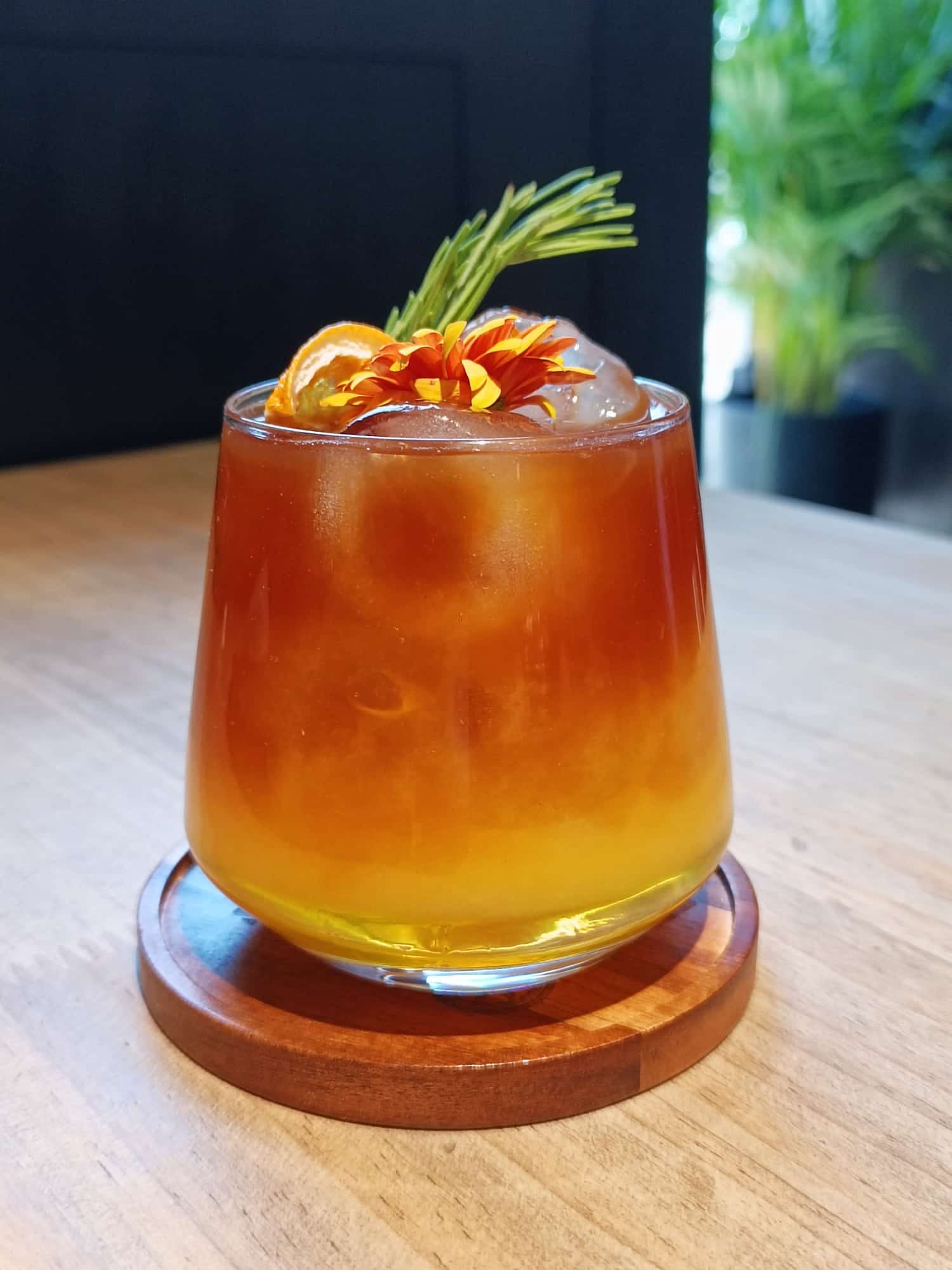
As I sipped my morning cold coffee—Tropical Express—at KafiWasi in Arequipa, Peru, a few thoughts crossed my mind about how often we fail to count our blessings.
During my travels, I’ve seen tourists whine, complain, and stomp their feet like children.
There’s no AC in the bus.
The window is open—I feel cold.
The cappuccino doesn’t taste like Starbucks.
There isn’t enough space between the seats.
And once, I heard a lady whisper, “The farmers smell bad.”
She didn’t realize—the smell she despised becomes the food on our tables.
It’s the scent of hard work, humility, and soil kissed by God.
Countless complaints.
What they forgot were the blessings around them—the stunning valleys of the Andes, the silent majesty of volcanoes, and the miracle of arriving safely through those twisting mountain roads.
“The Lord will keep you from all evil; He will keep your life” (Psalm 121:7, ESV).
One slip of the driver’s hand, one moment of distraction, and every passenger could become a memory at the bottom of an 800-foot slope. Yet they reached safely. That alone is worth a hundred thank-yous.
Gratitude is not our natural language—it’s one we must learn, word by word.
We are quick to notice what’s missing and slow to recognize what’s already overflowing.
Complaints come easily; thanksgiving requires vision.
When our hearts grow silent long enough to listen, we begin to realize: safety, sunrise, and even a simple cup of coffee are not coincidences. They’re whispers of grace, counted best when we pause to see them.
Counting Numbers
People count numbers differently across cultures and traditions.
In many Asian countries, grocery-store owners rarely use calculators for simple additions—a small act that shows confidence and sharp memory.
In some parts of India, they even look down on you if you use a calculator for basic math.
But here in Peru, even to add 10 + 20 + 30, many shopkeepers reach for a calculator.
Out of curiosity, I once asked a store owner, “Why do you use a calculator for such easy numbers?”
He smiled. “I’m just being careful.”
I liked his answer.
Being careful—that’s the key to counting our blessings. Even when we know them by heart, we must still pause and recount them carefully.
People often fail to count their blessings because they lack what I call a life calculator—something that helps them keep track of grace.
In earlier generations, elders wrote in diaries every night. Those pages became family ledgers of gratitude—stories of kindness, harvest, and answered prayer.
Those diaries were calculators of gratitude.
Reminders to stay thankful—to God and to people.
The Life Calculators
Those life calculators can take many forms—a notebook, a Google Keep note, a prompt in an AI tool, or even a person.
Most people already know their blessings, yet sometimes they need someone to remind them.
Last month, when I climbed Machu Picchu, I met a guide named Nohemi Cuba, a woman with forty years of experience. Her daughter, Luciana, is a psychologist in Cusco. Before we parted, Nohemi asked me to meet her daughter later and help her build a website.
A few days later, I met Luciana in a coffee shop.
She was young, driven, and eager to rise in her career.
During our conversation, the Holy Spirit whispered, “Help her see her blessings.”
So I asked, “Luciana, do you know your blessings?”
She paused and began listing a few—her education, her family, her health. Then I added:
Your mother climbs Machu Picchu every day through wind and rain to make her living. Her job carries real danger. As a counselor, you work in warmth, safe from cliffs, with the freedom to rest whenever you wish. That’s a notable blessing.
Her eyes glistened.
That day, I was her life calculator—reminding her of the blessings she already had but hadn’t tallied.
“Oil and perfume make the heart glad, and the sweetness of a friend comes from his earnest counsel” (Proverbs 27:9, ESV).
Sometimes, wise counsel isn’t a sermon—it’s a simple reminder spoken in love. On that day, I became both a life calculator and a counselor, guided by the Counselor Himself.
When We Forget to Count the Blessings
When Life Feels Ordinary
We stop seeing the miracles hidden in the mundane—breath, sunrise, laughter, and shelter.
Routine dulls wonder, familiarity blinds gratitude.
A few years ago, an Ethiopian lady I met in California shared a proverb:
“At hand, it is copper; thrown away, it becomes gold.”
Most times, we don’t recognize the blessing beside us. It feels like copper. Only when it’s gone does it shine like gold.
People did this to Jesus Christ. Had they realized He was the gold among them, they would never have crucified Him.
Let’s learn this lesson and count the gold already in our lives.
When We Compare Ourselves to Others
Comparison kills gratitude.
Social media amplifies it—people count others’ highlights instead of their own blessings.
As an old saying goes, “The moment you start measuring your life by another’s yardstick, you lose sight of your own harvest.”
A few of my friends envy my travels—in a good way. Their executive lives keep them grounded while I roam freely. I chose a consultant’s life decades ago. No stock options, no corporate cars, no first-class flights—but freedom.
They hope to travel after sixty-five.
I already know: it’s hard to climb Machu Picchu at that age.
I’ve climbed it—and come down smiling.
If we keep comparing what we lack, we forget the gold in our hands.
That, I believe, displeases God.
When We Are in the Middle of a Storm
In trials, blessings hide behind clouds. Pain narrows vision. Yet storms bring unseen graces—wisdom, humility, deeper faith.
Sometimes the blessing is not the miracle we prayed for, but the endurance we received.
A few days ago, I fell thirty feet in Colca Canyon.
Thirsty and shaken, I searched for a used bottle with a few drops of water. For a moment, I forgot my blessings.
Later I noticed the photo: only one tree above the spot where I fell. Its roots had given me just enough hold to climb up. The other trees began farther down.
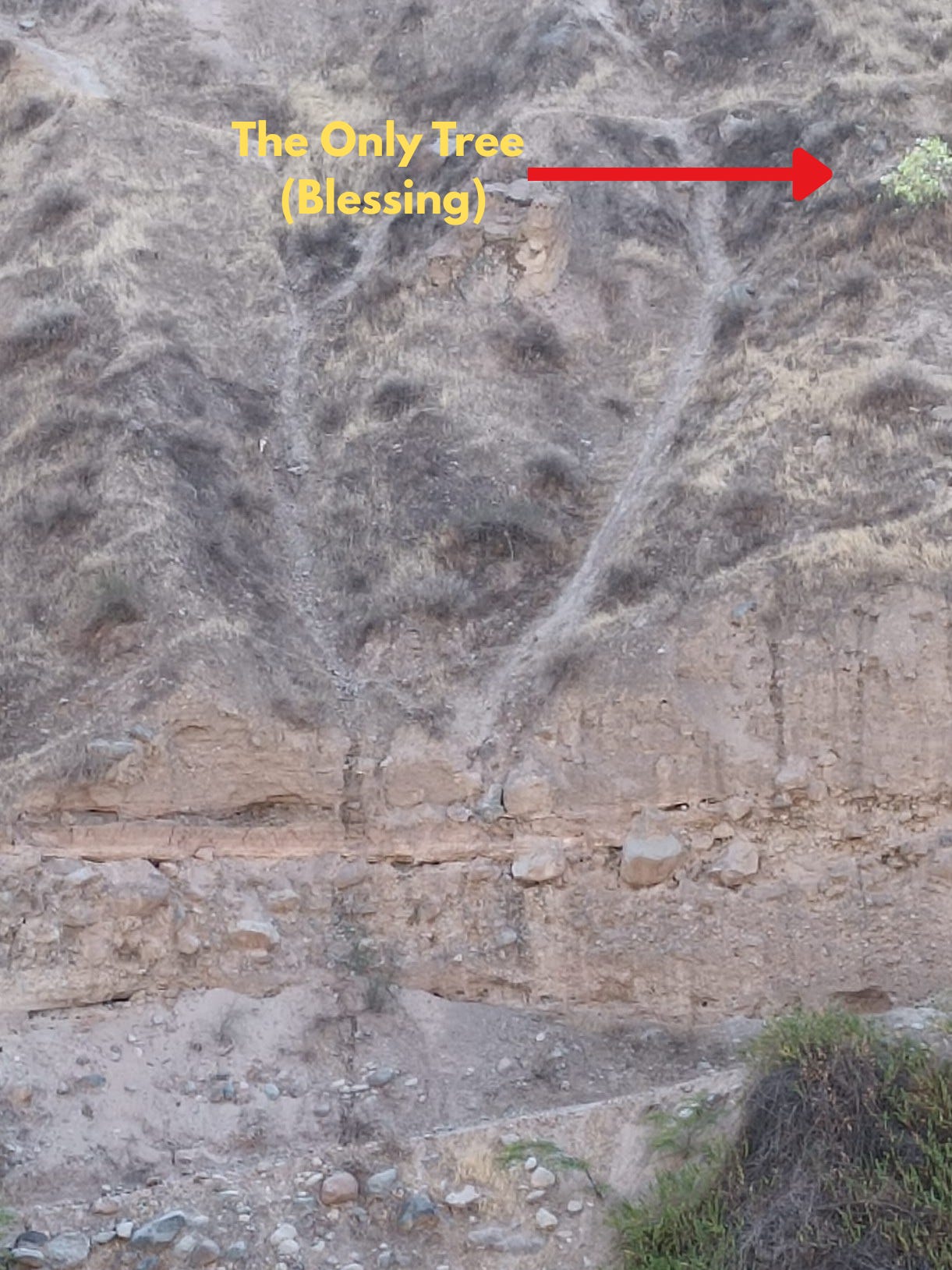
That single tree was planted by God years ago, knowing one day I would need it.
Every canyon we fall into has a purpose—to show us the root He planted long ago to save us.
When I woke the next morning, shame softened into gratitude.
I had used His blessing—the tree—and hadn’t even realized it.
Countless blessings and kindness within twenty-four hours.
He is always good.
Immanuel.
He is always with us.
We simply learn to say Immanuel in the storm—
and He takes care of the rest.
“The Lord is near to the brokenhearted and saves the crushed in spirit” (Psalm 34:18, ESV).
When We Expect Too Much, Too Soon
Patience is a fruit of the Spirit.
Lose it, and the others soon suffer.
If I had waited a few more minutes in Colca Canyon, I might not have fallen. But I rushed—excited, careless—and missed the Oasis ahead.
Maybe next time.
But “next time” only exists for things like travel, food, or cars—all material.
There is no next time for health, life, or a moment once lost.
Children say, “I can’t wait to grow up.”
Then, facing bills and mortgages, they whisper, “I wish I could go back.”
Life rarely gives the best of both worlds.
Impatience blinds us. We pray for breakthroughs but miss the beauty of progress.
God’s timing blesses us in seeds, not fruits—and we fail to count the seeds as blessings.
We can’t always see the sprouts forming underground.
But He is working. Always.
Our job is to wait—
and trust the Gardener.
Never Be Afraid of Falling
I have survived many storms.
Rheumatic fever in childhood—painful years, yet surrounded by family and a loving village (Blessing).
I survived 9/11, a financial collapse, and the COVID era.
I survived a childhood fall, betrayal by close friends, a 2007 car accident in Syracuse, and the mountain fall in Colca Canyon in 2025—my latest resurrection.
Every fall carried a hidden blessing.
Every fall resurrected me in a different way.
Last night, sitting on a wooden bench in Arequipa, I asked,
“Why did God save me every time?”
Then the answer came.
To write this blog to you.
To write about Him.
To write about His grace.
If you are reading this, I am your life calculator.
God simply used me to remind you to count and write your blessings.
Once you realize that His great commission for your life is to serve Him alone, you’ll no longer need a life calculator—because your heart itself will keep the count.
May God give you the wisdom to count your blessings.
Conclusion
Blessings are not always visible, but they are always nearby. They come as people, moments, lessons, and sometimes even as falls.
Every canyon we survive becomes a cathedral of memory where grace echoes back, “You were never alone.”
Counting blessings is more than gratitude—it’s worship.
It’s how we keep sight of the Gardener who planted the tree long before we fell.
Prayer
Lord,
Teach me to count what truly counts. Open my eyes to see the gold hidden on ordinary days. When impatience clouds my vision, kindly remind me you are near. When storms rise, whisper Immanuel in my heart. Make my life a ledger of praise, and my words a calculator of grace. In Jesus’ name, Amen.
About the author
Lawrence Manickam is a servant of the Lord and founder of Calvary International Mission. He is a Canadian Indian with Mexican permanent residency, living an international life and sharing the love of Christ across cultures. In July 2024, he completed his Master of Arts in Pastoral Counseling at Liberty University, Virginia.
Feel free to contact him if you need biblical counseling, prayer support, or simply a listening ear.
✨ Want more encouraging messages like this? Subscribe to his Substack to receive future posts straight to your inbox.