

Come Hungry
Some fasts end in miracles. Some end in obedience. Both are answers.

In my childhood, I loved going to fasting and prayer at a local church because the food served after the fast was so delicious. It was a feast—chicken, goat, aromatic rice, potato fries, sweets, and juice. That feast was certainly one of my motivating factors in those years.
Though I did not understand the meaning of fasting in those tender years, I know now that God listened to those fasting prayers in my life. He did not miss a single one of them. He heard them, worked through them, and remained faithful to me. I was the one who deviated from the destiny He had for me and ran like the prodigal son. But He remained faithful, and at the right time He brought me back.
So do not let others—especially Christian legalists—tell you that fasting has no place in seeking the will of God. We are not fasting to force God to do what we want. We fast to seek Him, to ask Him to reveal His will in our lives, and to give ourselves to that will.
And when we do, God listens. I am a witness.
Later, I forgot to fast. In fact, I ended up eating every day and hardly praying at all. Career success, recognition, men’s clubs, and Western comfort made me forget Him. But He did not forget me. He continued working in my life and fulfilling His purposes, and I believe He was not only honoring the prayers of my childhood but also the fasting and prayers of my parents.
My mother always prayed that the Lord would make me a missionary. She wanted me to attend Bible college instead of engineering school. I rebelled and went to engineering college.
But look at what happened.
In 2022, I went to Liberty University and eventually completed my Master of Arts in Pastoral Counseling. My mother is no longer alive today, but I can imagine her rejoicing that God answered the prayers she prayed many years ago.
Fasting is not a bargaining tool to change the will of God. None of us can change Him. But fasting is one way we come before Him hungry, humble, and willing to hear.
And He listens.
Esther: Fast for the Miracle
Centuries before Jesus fasted in the wilderness, a young Jewish queen found herself standing between her people and destruction. Haman had obtained an order to annihilate the Jews throughout the Persian Empire, and Mordecai sent word to Esther that she had to approach the king and plead for her people.
There was only one problem. Anyone who approached the king without being summoned could be executed, and Esther herself had not been called into his presence for thirty days. She needed a miracle.
And what did Esther do?
She called for a fast.
“Go, gather all the Jews to be found in Susa, and hold a fast on my behalf, and do not eat or drink for three days, night or day. I and my young women will also fast as you do. Then I will go to the king, though it is against the law, and if I perish, I perish.” (Esther 4:16)
Esther did not fast because she already had control of the situation. She fasted because she had none.
For three days, an entire community went without food while Esther prepared to walk into a room from which she might never walk out again. Then something happened. The king saw Esther, and instead of condemning her, he extended the golden scepter.
The door that could have led to her death became the doorway to deliverance.
From there, the story begins to turn. Esther receives favor. Haman’s conspiracy is exposed. The man who built gallows for Mordecai dies upon them himself. Mordecai is elevated, the Jews are given the means to defend themselves, and what began with a death decree ends with deliverance and celebration.
Notice something important. Esther’s fasting did not persuade a reluctant God to abandon His plans and accept Esther’s plan instead. God had already made promises concerning His people. Long before Esther was born, He had entered into covenant with Abraham and set apart a people through whom His redemptive purposes would unfold. Haman’s plan threatened a people whom God, in His providence, was preserving.
Esther did not fast against the will of God.
She fasted inside the unfolding will of God.
That distinction matters. When we fast, we are not twisting God’s arm. We are not starving ourselves until heaven finally agrees with us. But neither should we reduce fasting to a meaningless religious exercise. Esther faced an impossible situation, called God’s people to fast, and stepped forward in faith—and extraordinary deliverance followed.
So when you are standing before something that appears impossible, pray. Fast. Ask God for the miracle. Ask Him to open the door that you cannot open. Ask Him to give favor that you cannot manufacture. Ask Him to overturn what you cannot overturn. And while you ask boldly, leave the outcome in His hands.
Perhaps the miracle you are asking for is not an attempt to change God’s will at all. Perhaps, like Esther, your fasting is becoming part of the way His will unfolds.
Jesus: Hunger Under the Father’s Will
Esther fasted because she needed divine intervention to save her people. Jesus fasted at the beginning of the mission through which He would bring salvation to humanity. Immediately after His baptism, before His public ministry began, Jesus was led by the Spirit into the wilderness.
“Then Jesus was led up by the Spirit into the wilderness to be tempted by the devil. And after fasting forty days and forty nights, he was hungry.” (Matthew 4:1–2)
Forty days.
No feast waiting at the end like I had. No immediate miracle. No comfortable answer. Jesus was hungry, and that hunger became the very point at which Satan tempted Him.
“If you are the Son of God, command these stones to become loaves of bread.” (Matthew 4:3)
There was nothing sinful about bread. There was nothing sinful about hunger. Jesus had the power to turn stones into bread, but He refused to use His power simply because His body demanded relief. He answered:
“Man shall not live by bread alone, but by every word that comes from the mouth of God.” (Matthew 4:4)
This is where fasting becomes deeper than asking God for something. Sometimes we fast because, like Esther, we desperately need God to intervene in our circumstances. It could be anything.
But sometimes we fast because we need to learn that our hunger does not have the right to become our master.
Jesus could have ended His hunger in a moment. He did not.
Why? Because satisfying a legitimate need outside the Father’s will would have meant allowing hunger to dictate His obedience. Jesus entered the wilderness full of the Holy Spirit, and after the testing He returned to Galilee in the power of the Spirit.
The wilderness did not destroy Him. The hunger did not control Him. The temptation did not redirect Him. He came out ready for the mission the Father had given Him.
That is why fasting is not merely about getting something from God. Sometimes fasting prepares us to obey God when we do not get what we want immediately. Esther teaches us to fast and ask boldly for the miracle. Jesus teaches us to fast and remain faithful even when the bread does not appear.
So fast. Ask God boldly. Believe that He can intervene. But also tell Him:
“Even while I am hungry, your will is better than my appetite.”
Middle Eastern Context
I often tell Christians that understanding the culture surrounding the Bible helps us understand Scripture more deeply. Not everyone has the opportunity to study ancient history, languages, customs, and religious practices and then compare them carefully with biblical events. This is also why I believe the guidance of the Holy Spirit is essential when we read Scripture. Historical knowledge can give us context, but the Holy Spirit helps us receive the spiritual truth God is communicating through His Word.
Earlier this year, I stepped into a culture where fasting was still visible in public life, the way it often was in the ancient world.
I arrived in Morocco only about five days before the end of Ramadan. It was around 3 PM when I landed at Casablanca airport, and almost every restaurant and food outlet was closed. Only a few cell phone stores, currency exchange counters, and other businesses remained open. At first, I did not connect what I was seeing with Ramadan.
My friend Anass came to the airport to pick me up. As we drove toward Mohammedia, a beautiful coastal city outside Casablanca, I noticed that restaurants and many other places remained closed. Anass explained to me that people were fasting and that the streets would become much more active after sunset.
It was my first experience in a Muslim-majority country during Ramadan. Over the next few days, I saw fasting practiced not merely as a private act but as something visible throughout society. I saw people praying, giving money to others, and taking the fast very seriously. Two Moroccans even gave me money because I was a foreigner. :)
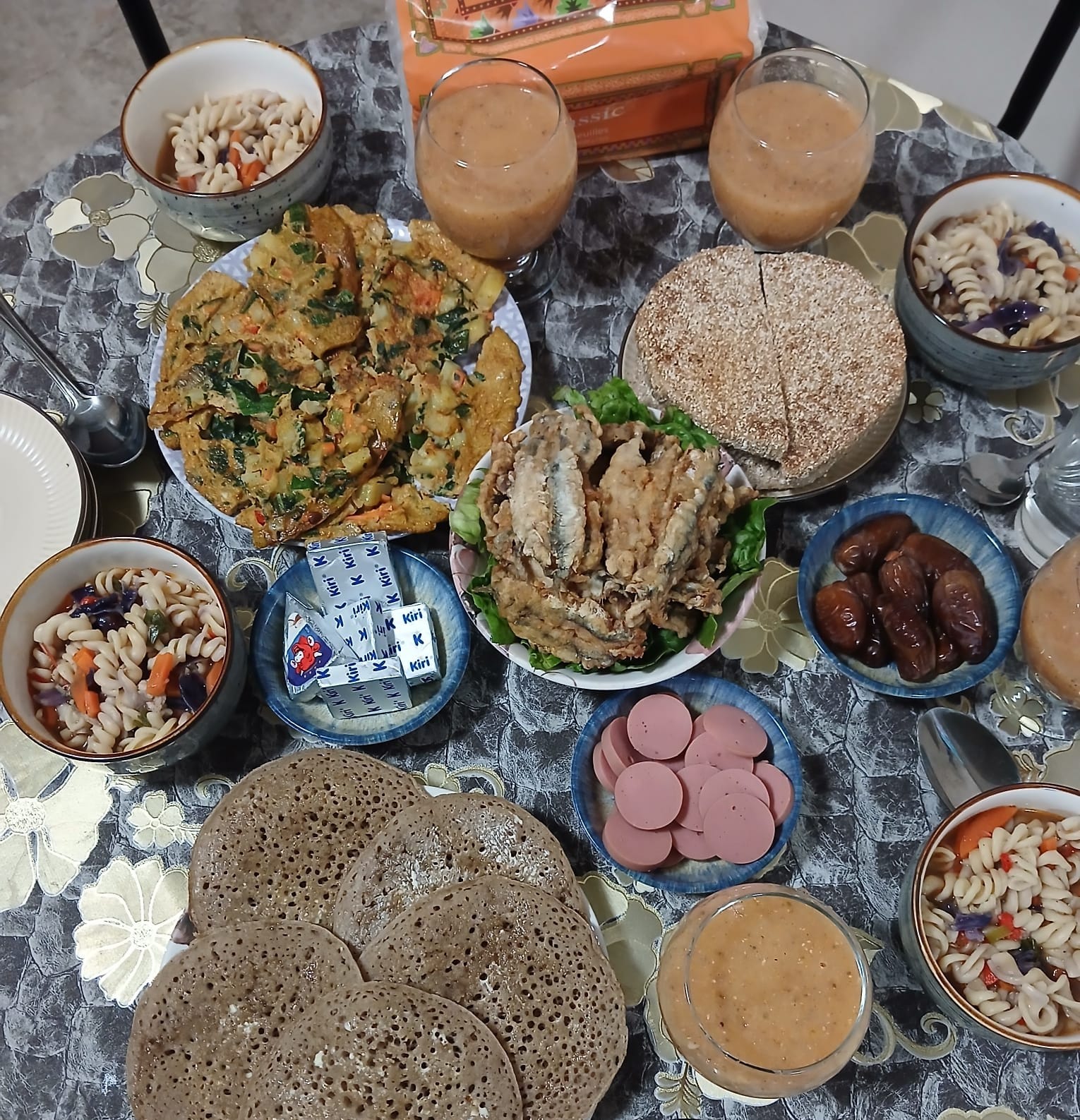
I also fasted during those five days—out of respect for the dominant culture and, practically speaking, because finding food during the daytime was not easy. It is not nice to eat cookies from my bag when the whole country is fasting. But those five days became something meaningful for me personally. I used the quiet daytime hours to read the Bible and pray to our Lord Jesus Christ, and in the evenings, I enjoyed Iftar dinner at Anass’s home.
That experience helped me understand something important when I later read Jesus’ words about fasting. In the ancient world, fasting was not always invisible. Jewish people also practiced public and communal fasts, and fasting could be accompanied by recognizable outward signs—mourning, ashes, neglected appearance, public gatherings, and other visible expressions of repentance or sorrow.
The Pharisees were certainly known for fasting. In the New Testament, we even hear a Pharisee saying:
“I fast twice a week.” (Luke 18:12)
But when Jesus taught about fasting in Matthew 6, He did not specifically say, “Do not fast like the Pharisees,” nor did He mention the Sadducees. He said:
“And when you fast, do not look gloomy like the hypocrites, for they disfigure their faces that their fasting may be seen by others.” (Matthew 6:16)
That distinction is important. Jesus was not condemning public fasting. He was not condemning communal fasting. He was not even condemning the outward customs that sometimes accompanied genuine repentance.
He was condemning performance.
The problem was not that people could see someone fasting. The problem was that someone wanted to make sure people saw him fasting. The fasting had become a religious advertisement, and Jesus called such people hypocrites because their attention had shifted from God to an audience.
The Greek idea behind hypocrite originally carried the sense of an actor or performer. In Matthew 6, the religious act had effectively become a stage performance:
Look at me. Look how much I am suffering for God. Look how devoted I am. Look how spiritual I must be.
Jesus’ problem was the motive—“so that their fasting may be seen by others.” That is why He called them hypocrites. And then Jesus gave His disciples a completely different instruction:
“But when you fast, anoint your head and wash your face, that your fasting may not be seen by others but by your Father who is in secret.” (Matthew 6:17–18)
In other words: go about your life. Wash your face. Do not manufacture suffering for people to admire. Your Father already sees you.
There is another detail in Jesus’ words that we should not miss.
He said, “when you fast.” Not “if you fast.”
Jesus expected fasting to remain part of the spiritual lives of His followers. His concern was not whether they fasted, but why they fasted and whose attention they were seeking.
Esther teaches us to fast when we desperately need God’s intervention. Jesus in the wilderness teaches us to fast while giving even our legitimate hunger to the Father’s will. And Matthew 6 teaches us something else:
Do not turn fasting into a performance.
Fasting is supposed to make us hungry for God, not hungry for applause. Whether anyone else notices your fasting is secondary. The important question is this:
Does your Father see a heart that is genuinely seeking Him?
You can read more about my experiences in Morocco in the travel blogs I have listed below.
My Fasting Life
The devil offered Jesus bread. The Father offered Him a mission. Jesus chose the Father.
That is one of the deepest lessons fasting can teach us. You may be hungry for an answer. Hungry for healing. Hungry for companionship. Hungry for recognition. Hungry for financial breakthrough. Hungry for a door to open. None of those desires are necessarily wrong.
But fasting asks a harder question: what will you do while you are hungry?
Will you manufacture an answer because God seems slow?
Will you enter the wrong relationship because loneliness hurts?
Will you compromise because the opportunity looks too good to lose?
Will you force open a door that God has not opened?
Will you complain that God is silent, as I have?
Or will you remain before Him and say:
“Lord, I am hungry. I am asking. I am waiting. But I still choose You.”
These days, I fast once a week, usually for 24 continuous hours, and spend dedicated time praying for people. After I finish praying, I often send them a personal prayer or message. It is not a religious performance. I share it because I want people to know that fasting and prayer can change us, deepen our dependence on God, and become part of the way He works in the lives of others.
Some Christians are cautious about speaking of miracles. I believe in them. I have seen God intervene in my life in ways I cannot dismiss as coincidence, and those experiences continue. Especially when I fast and pray for others, I have seen doors open, circumstances change, strength arrive, and blessings unfold in ways that remind me that God is still at work.
I do not believe fasting forces God’s hand. I believe fasting places us before Him with fewer distractions, greater dependence, and a heart ready to receive whatever He chooses to do. Sometimes He gives the miracle we asked for. Sometimes He gives direction. Sometimes He changes the circumstances. Sometimes He changes us.
But I have learned this: it is always worth coming before God hungry.
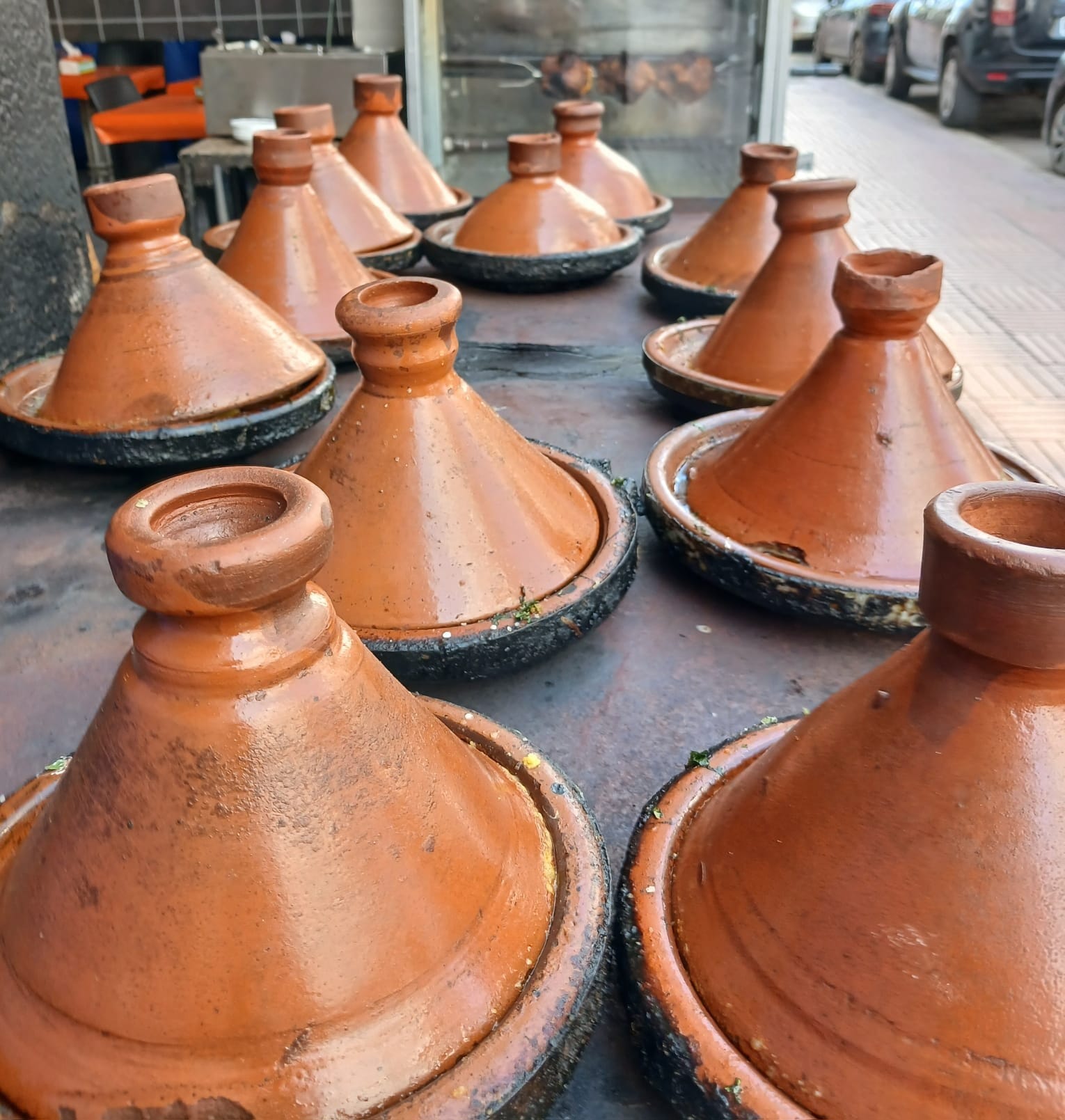
And I still remember what happened in Morocco. After spending about two weeks around Casablanca, I returned to the airport to fly to Errachidia on my way to visit the Sahara Desert. The airport looked completely different. The restaurants were open. Food was everywhere. And the smell of tagine—a slow-cooked Moroccan stew named after the conical clay pot in which it is prepared—was mesmerizing.
What happened in between? Ramadan had ended.
For weeks, millions of people had exercised discipline because of their faith. That stayed with me. If people can discipline their bodies so seriously for what they believe, then we Christians should ask ourselves what we are willing to do in devotion to our Savior, Jesus Christ.
More fasting.
More prayer.
More worship.
Not to impress people.
Not to earn God’s love.
Not to force His hand.
But because He is worthy.
Today, I am fasting and praying. If you have a prayer request, send it my way. I would be honored to pray for you.
Morocco Travel Blogs
Morocco - Silence, Faith, and Unexpected Beauty
Morocco - Silence, Faith, and Unexpected Beauty

On March 16, 2026, I took the underground from Hounslow Central to Terminal 5 at Heathrow.
Morocco: Fruits and Evil in the Sahara

God’s Logistics

About the Author
Lawrence Manickam is the founding pastor of Calvary International Church, Mexico City. Born in India, shaped in Canada, and called to Mexico, he shares the love of Jesus across cultures through writing, teaching, and personal ministry.
He holds an MA in Pastoral Counseling from Liberty University and is the author of three books, including Trump & Jesus—Find them all here Amazon author page link.
Need prayer, biblical counseling, or a listening ear? Reach out anytime. And if this message encouraged you, subscribe to receive future posts in your inbox.
Subscribe for weekly reflections on Scripture and life.